The research on church planting is often not very encouraging to those of us serving in established churches. For a good primer on the absolute importance of church planting, I would recommend Why Plant Churches by Tim Keller, published in 2002.
The fact we all must reckon with is that church planting is a crucial strategy. “Nothing else – not Crusades, outreach programs, para-church ministries, growing mega-churches, congregational consulting, nor church renewal processes – will have the consistent impact of dynamic, extensive church planting.” (Keller, 2002.) Many of us would like to believe that we should spend our effort revitalizing established churches rather than planting new ones. After all, they have plenty of seats, already have buildings, and it would put more Christians together with each other in unity.
Many of you know about my vision to make High Point a “teaching church” – much like some hospitals are teaching hospitals. In other words, my hope is to build a robust in vibrant church in which some of our top young people can cut their teeth in ministry and be prepared for whatever ministry God is calling them to. Some of these people will be church planters. Some will lead in established churches, seeking to revitalize them. Others will work in parachurch ministries. And others may not go on to work in vocational ministry, but will be lifelong major contributors to a local church.
In any healthy church you’ve got to hope you’ll be running into people all the time who are just starting to read the Bible. What do you tell them? Where should they start? Do they need any aids?
I was recently asked in our small group to put together a list for where someone can start reading the Bible. Here is my list.
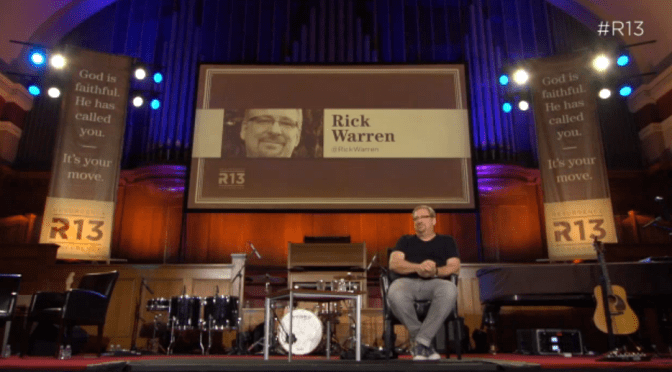
Here is the Rick Warren talk I was talking about Sunday Morning.
Warren talks about three categories of temptations that sum up all the temptations we deal with. They are:
Lust of the Flesh
Lust of the Eyes
Pride of Life
If you didn’t catch the sermon at High Point on Sunday, November 17, you can listen to it here.
Resurgence 13 is a great thing, and I’d recommend any session that looks interesting. I especially like Matt Chandler. Mark Driscoll’s main session is important.
Here are two helpful Internet sources I came across in my research for Psalm 110. They are clear and good summaries.
A messianic Jewish article explaining the meaning of Psalm 110.
An article about Jesus’s identity – what did Jesus think about the Messiah being the son of David?
Both of these are short and take into account important things related to seeing Psalm 110 in a Jewish/Hebrew perspective in order to see it properly in reference to its fulfillment in Christ.
You might start small group discussions by simply asking, “What did anybody find helpful, confusing or enlightening from the teaching on Sunday?” For many small groups this will be enough to get things going and keep things going. When things slow down, then turning to the Scripture passage itself and working through it will usually more than fill the rest of the time you have for discussion that is, if you are taking time to do the other four purposes of small groups: community, missionary support, substantive prayer, organized service.
In case your discussion needs a little stimulation here are some things from the sermon you could bring up:


 Engage & Equip